Bill Nye the Science Guy S05E20 · Motion
Watch now
Overview
Things can appear to be moving, when they really aren’t. Sometimes an object might seem to be at rest, even when it is in motion. It’s all relative. Relative motion, that is. How things appear to move depends on how you, or any observer, happens to be moving. So, if you’re on a bus looking out a window into another bus, and your bus begins to back up slowly, you may think the other bus is moving forward, when really it’s not moving at all. That’s motion in motion. It happens all around us all the time.
Torrents
Searching torrents…
Subtitles
…
Episodes
-
 1
1. Forensics1997-09-19 · 26mForensic scientists try to find out the who, what, when, where, and why of events in the past – crimes. Most forensic scientists work in police labs. They collect evidence from the
1
1. Forensics1997-09-19 · 26mForensic scientists try to find out the who, what, when, where, and why of events in the past – crimes. Most forensic scientists work in police labs. They collect evidence from the
-
 2
2. Space Exploration1997-09-26 · 26mSpace is hard to explore, because it’s really, really big. Most things in space are so far away that people we build special equipment just to see them. We use telescopes to magnif
2
2. Space Exploration1997-09-26 · 26mSpace is hard to explore, because it’s really, really big. Most things in space are so far away that people we build special equipment just to see them. We use telescopes to magnif
-
 3
3. Genes1997-10-17 · 26mThe color of your eyes, the shape of your nose, and the straightness (or curliness) of your hair depend on your genes. Not jeans the pants, but genes, the long strands of chemicals
3
3. Genes1997-10-17 · 26mThe color of your eyes, the shape of your nose, and the straightness (or curliness) of your hair depend on your genes. Not jeans the pants, but genes, the long strands of chemicals
-
 4
4. Architecture1997-10-24 · 26mTowers, teepees, castles, and condominiums – some kind of planning goes into all buildings, no matter how big or small. Architects are people who design buildings, and the areas ar
4
4. Architecture1997-10-24 · 26mTowers, teepees, castles, and condominiums – some kind of planning goes into all buildings, no matter how big or small. Architects are people who design buildings, and the areas ar
-
 5
5. Farming1997-10-31 · 26mBefore food gets into your kitchen, before it even gets to the store, it’s on a farm. Almost everything we eat is grown on a farm, an area of land used to raise animals and plants.
5
5. Farming1997-10-31 · 26mBefore food gets into your kitchen, before it even gets to the store, it’s on a farm. Almost everything we eat is grown on a farm, an area of land used to raise animals and plants.
-
 6
6. Life Cycles1997-11-14 · 26mMy, how you’ve grown! The popular exclamation from your Auntie may be no great revelation, but growing bigger is a part of life. In fact, it’s part of the whole cycle, or pattern,
6
6. Life Cycles1997-11-14 · 26mMy, how you’ve grown! The popular exclamation from your Auntie may be no great revelation, but growing bigger is a part of life. In fact, it’s part of the whole cycle, or pattern,
-
 7
7. Do-It-Yourself Science1997-11-21 · 26mDo-it-yourself science involves a question, observations, a hypothesis, and experimentation. You have probably come up with questions after you noticed something unusual. For insta
7
7. Do-It-Yourself Science1997-11-21 · 26mDo-it-yourself science involves a question, observations, a hypothesis, and experimentation. You have probably come up with questions after you noticed something unusual. For insta
-
 8
8. Atoms & Molecules1997-11-28 · 26mAtoms are reeeeally small. They are so small that you can’t see them with just your eye. It takes as many as 10 million of them side-by-side to measure a single millimeter. In fact
8
8. Atoms & Molecules1997-11-28 · 26mAtoms are reeeeally small. They are so small that you can’t see them with just your eye. It takes as many as 10 million of them side-by-side to measure a single millimeter. In fact
-
 9
9. Ocean Exploration1997-12-05 · 26mOcean exploration is a tricky, risky business since humans can’t naturally survive under the ocean. Ocean explorers are constantly inventing new tools to help them dive deep into t
9
9. Ocean Exploration1997-12-05 · 26mOcean exploration is a tricky, risky business since humans can’t naturally survive under the ocean. Ocean explorers are constantly inventing new tools to help them dive deep into t
-
 10
10. Lakes & Ponds1998-02-21 · 26mWhat do you get when you have a big hole in the ground and some water? Lakes and ponds. All lakes and ponds have one thing in common – they happen when a basin, or hole, forms, and
10
10. Lakes & Ponds1998-02-21 · 26mWhat do you get when you have a big hole in the ground and some water? Lakes and ponds. All lakes and ponds have one thing in common – they happen when a basin, or hole, forms, and
-
 11
11. Smell1998-02-28 · 26mHow do noses work? Objects give off tiny amounts of tiny molecules into the air. When just a few of these molecules get up your nose, they dissolve in the mucus up there. Some mole
11
11. Smell1998-02-28 · 26mHow do noses work? Objects give off tiny amounts of tiny molecules into the air. When just a few of these molecules get up your nose, they dissolve in the mucus up there. Some mole
-
12
12. Caves1998-04-25 · 26mCaves come in all different shapes and sizes depending on how they were formed. Spelunkers (people who explore caves) have plenty of descriptive names for caves and the natural roc
-
 13
13. Fluids1998-05-02 · 26mFluids are cool; they ooze and swoosh. Whatever container you put a fluid in, that fluid will take the same shape. Milk poured into a pitcher forms to the shape of the pitcher. If
13
13. Fluids1998-05-02 · 26mFluids are cool; they ooze and swoosh. Whatever container you put a fluid in, that fluid will take the same shape. Milk poured into a pitcher forms to the shape of the pitcher. If
-
 14
14. Erosion1998-05-09 · 26mDirt, sand, and rock from the Earth’s surface gets blown, sliced, torn, swallowed and distributed all over the world. What was yesterday’s hill is tomorrow’s flat plain. The planet
14
14. Erosion1998-05-09 · 26mDirt, sand, and rock from the Earth’s surface gets blown, sliced, torn, swallowed and distributed all over the world. What was yesterday’s hill is tomorrow’s flat plain. The planet
-
 15
15. Comets & Meteors1998-05-16 · 26mOuter space is full of stuff. We’re not just talking about planets and moons. There are some bits and pieces, too small to be noticed most of the time that float around and occasio
15
15. Comets & Meteors1998-05-16 · 26mOuter space is full of stuff. We’re not just talking about planets and moons. There are some bits and pieces, too small to be noticed most of the time that float around and occasio
-
 16
16. Storms1998-05-23 · 26mStorms are big, loud, and often accompanied by rain, snow, sleet, or hail. Where do these wild, dangerous, and necessary tornadoes, hurricanes, and thunderstorms come from? Storms
16
16. Storms1998-05-23 · 26mStorms are big, loud, and often accompanied by rain, snow, sleet, or hail. Where do these wild, dangerous, and necessary tornadoes, hurricanes, and thunderstorms come from? Storms
-
 17
17. Measurement1998-05-30 · 26mDid you know that the Concorde moves 300,000 times faster than a land snail? Or that a giant redwood can be as tall as a 35-story apartment building? The only reason we can make th
17
17. Measurement1998-05-30 · 26mDid you know that the Concorde moves 300,000 times faster than a land snail? Or that a giant redwood can be as tall as a 35-story apartment building? The only reason we can make th
-
 18
18. Patterns1998-06-06 · 26mEvery time you look at something, hear something, touch something, smell something, or taste something, your brain collects a little information about the world around you. You may
18
18. Patterns1998-06-06 · 26mEvery time you look at something, hear something, touch something, smell something, or taste something, your brain collects a little information about the world around you. You may
-
 19
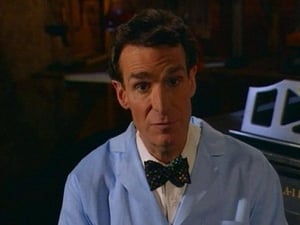
19. Science of Music1998-06-13 · 26mMusic is the art and science of expressing ideas and feelings through sound. A sad song can say more about how someone feels than most words, and a familiar song can make crowds cl
19
19. Science of Music1998-06-13 · 26mMusic is the art and science of expressing ideas and feelings through sound. A sad song can say more about how someone feels than most words, and a familiar song can make crowds cl
-
 20
20. Motion1998-06-20 · 26mThings can appear to be moving, when they really aren’t. Sometimes an object might seem to be at rest, even when it is in motion. It’s all relative. Relative motion, that is. How t
20
20. Motion1998-06-20 · 26mThings can appear to be moving, when they really aren’t. Sometimes an object might seem to be at rest, even when it is in motion. It’s all relative. Relative motion, that is. How t