Time Team S10E05 · Joust Dig It - Greenwich, London
Watch now
Overview
Time Team investigates Placentia, the Greenwich palace of king Henry VIII. They try to locate his royal armoury and the tiltyard, where the court and nobility would have jousted and been entertained in mock castles. In the experimental part of the program, Tony looks at how Tudor armour would have been made and gets a breastplate of the period hammered and fitted. The armoury as a turns out to be too elusive for the archaeologists, but localized amounts of hammer scale, a residual product of forging, indicate its presence there. However, the tiltyard complex with its associated structures, like the banqueting hall, are firmly located.
Torrents
Searching torrents…
Subtitles
…
Episodes
SpecialsSeason 1Season 2Season 3Season 4Season 5Season 6Season 7Season 8Season 9Season 10Season 11Season 12Season 13Season 14Season 15Season 16Season 17Season 18Season 19Season 20Season 21Season 22Season 23Season 24Season 25
-
 1
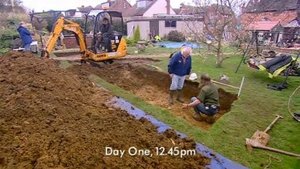
1. Garden Secrets - Raunds, Northamptonshire2003-01-05 · 50mTime Team investigates a back garden in Raunds, where a skeleton – aptly named Henry by his discoverer – has been found along with his Anglo-Saxon grave goods. The burial probably
1
1. Garden Secrets - Raunds, Northamptonshire2003-01-05 · 50mTime Team investigates a back garden in Raunds, where a skeleton – aptly named Henry by his discoverer – has been found along with his Anglo-Saxon grave goods. The burial probably
-
 2
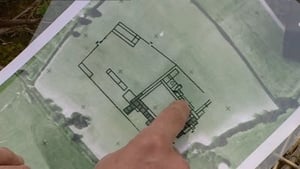
2. Mosaics, Mosaics, Mosaics - Dinnington, Somerset2003-01-12 · 50mTime Team travels to Somerset to investigate the discovery of an exquisite Roman mosaic in a field. The geophysical survey clearly indicates the presence of a substantial and well-
2
2. Mosaics, Mosaics, Mosaics - Dinnington, Somerset2003-01-12 · 50mTime Team travels to Somerset to investigate the discovery of an exquisite Roman mosaic in a field. The geophysical survey clearly indicates the presence of a substantial and well-
-
 3
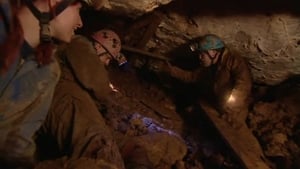
3. Peak District Practices - Carsington, Derbyshire2003-01-19 · 50mTime Team examines a mysterious cave in Derbyshire where cavers have found several skeletons, some of them newborn babies and the earliest dated to the Stone Age. Finds from the ca
3
3. Peak District Practices - Carsington, Derbyshire2003-01-19 · 50mTime Team examines a mysterious cave in Derbyshire where cavers have found several skeletons, some of them newborn babies and the earliest dated to the Stone Age. Finds from the ca
-
 4
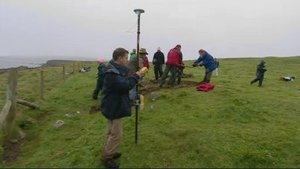
4. The Giant's Grave - Fetlar, Shetland2003-01-26 · 50mTime Team investigates a Shetland back garden for remains of Viking occupation after the discovery of a number of soapstone objects there. They also open a mound feature nearby cal
4
4. The Giant's Grave - Fetlar, Shetland2003-01-26 · 50mTime Team investigates a Shetland back garden for remains of Viking occupation after the discovery of a number of soapstone objects there. They also open a mound feature nearby cal
-
 5
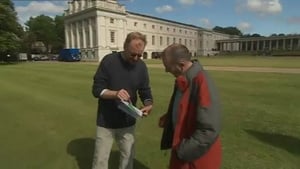
5. Joust Dig It - Greenwich, London2003-02-02 · 50mTime Team investigates Placentia, the Greenwich palace of king Henry VIII. They try to locate his royal armoury and the tiltyard, where the court and nobility would have jousted an
5
5. Joust Dig It - Greenwich, London2003-02-02 · 50mTime Team investigates Placentia, the Greenwich palace of king Henry VIII. They try to locate his royal armoury and the tiltyard, where the court and nobility would have jousted an
-
 6
6. Digging Liberty - Merton, London2003-02-09 · 50mTony Robinson and the team are hunting for Liberty's first factory in South London. 'Liberty silks' still evoke images of opulence and beauty, of floating dresses and more leisurel
6
6. Digging Liberty - Merton, London2003-02-09 · 50mTony Robinson and the team are hunting for Liberty's first factory in South London. 'Liberty silks' still evoke images of opulence and beauty, of floating dresses and more leisurel
-
 7
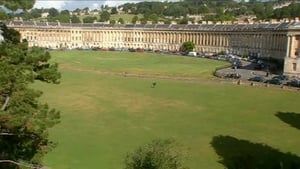
7. Death in a Crescent - Bath, Somerset2003-02-16 · 50mTime Team visit Bath to investigate parch marks seen in the park lawn of the Royal Crescent, indicating the presence of a large Roman road, possibly local remains of the Fosse Way.
7
7. Death in a Crescent - Bath, Somerset2003-02-16 · 50mTime Team visit Bath to investigate parch marks seen in the park lawn of the Royal Crescent, indicating the presence of a large Roman road, possibly local remains of the Fosse Way.
-
 8
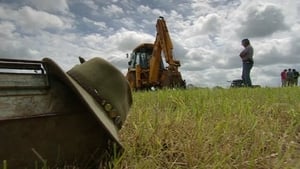
8. Back to Our Roots - Athelney, Somerset2003-02-23 · 50mTime Team revisits Athelney Abbey, the hideaway of Alfred the Great, and also the very first site investigated by the team one hundred programs earlier. Ten years of technological
8
8. Back to Our Roots - Athelney, Somerset2003-02-23 · 50mTime Team revisits Athelney Abbey, the hideaway of Alfred the Great, and also the very first site investigated by the team one hundred programs earlier. Ten years of technological
-
 9
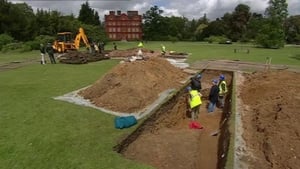
9. Looking for the White House - Kew Gardens, London2003-03-02 · 50mTime Team visits Kew Gardens to find the White House, part of the second Kew Palace complex and favourite home of mad king George III. While Carenza is shown how decorated wine gla
9
9. Looking for the White House - Kew Gardens, London2003-03-02 · 50mTime Team visits Kew Gardens to find the White House, part of the second Kew Palace complex and favourite home of mad king George III. While Carenza is shown how decorated wine gla
-
 10
10. Rescuing the Dead - Leven, Fife2003-03-02 · 50mA building development threatens a Bronze Age cemetery in Fife, and Time Team is there to carry out rescue excavations together with County Archaeologists. The graves are Cist buri
10
10. Rescuing the Dead - Leven, Fife2003-03-02 · 50mA building development threatens a Bronze Age cemetery in Fife, and Time Team is there to carry out rescue excavations together with County Archaeologists. The graves are Cist buri
-
 11
11. Not a Blot on the Landscape - Castle Howard, Yorkshire2003-03-16 · 50mTime Team travels to Castle Howard to look for the lost village of Henderskelf, which was demolished around 1700 to make way for the new castle constructed on the estate and its fo
11
11. Not a Blot on the Landscape - Castle Howard, Yorkshire2003-03-16 · 50mTime Team travels to Castle Howard to look for the lost village of Henderskelf, which was demolished around 1700 to make way for the new castle constructed on the estate and its fo
-
 12
12. A View to a Kiln - Sedgefield, County Durham2003-03-16 · 50mRoman finds from Sedgefield prompt Time Team to visit a field and subject it to investigation. Air photographs and geophysical survey show tantalizing signs of activity below the t
12
12. A View to a Kiln - Sedgefield, County Durham2003-03-16 · 50mRoman finds from Sedgefield prompt Time Team to visit a field and subject it to investigation. Air photographs and geophysical survey show tantalizing signs of activity below the t
-
 13
13. Jailhouse Rocks - Appleby-in-Westmorland, Cumbria2003-03-30 · 50mThe police in Appleby-in-Westmorland, Cumbria, know that their station dates back to the first gaol built on the site in the 1770s. They also know that two subsequent prisons, from
13
13. Jailhouse Rocks - Appleby-in-Westmorland, Cumbria2003-03-30 · 50mThe police in Appleby-in-Westmorland, Cumbria, know that their station dates back to the first gaol built on the site in the 1770s. They also know that two subsequent prisons, from