Trials of Life S01E11 · Courting
Watch now
Overview
This programme surveys the methods employed in attracting a mate, mainly those of birds. The Indian florican inhabits long grass, and so is difficult to see. In order to gain attention, it 'trampolines' in the same spot for up to 400 times a day. Whales sing to their prospective partners, and the female's calls can be heard by suitors for over eight kilometres. When animals send out signals of attraction, they must also ensure that they don't entice the wrong species, and so have markings that differ prominently. Attenborough highlights the booby as an example: there are around half a dozen species, all of which may occupy the same island. However, the blue-footed booby reassures its chosen mate by continually lifting its feet. Tropicbirds and marsh harriers are shown providing graceful aerobatic displays, while the sac-winged bat uses a strong perfume to lure a companion. Among those birds that produce the most spectacular visual displays are the lyrebird (which also has an elaborate song), the peacock, and the riflebird (and indeed most other birds of paradise). The bowerbird invites potential partners to inspect its bower: a specially prepared area that contains a hut or walkway augmented by strikingly coloured objects. The intricate dances performed by manakins in Trinidad are also examined. Finally, Attenborough observes the topi's display courts, whose sharply defined boundaries are jealously guarded by rival males.
Torrents
Searching torrents…
Subtitles
…
Episodes
-
 1
1. Arriving1990-10-04 · 50mThe first episode examines the various methods by which creatures come into the world. Attenborough’s opening statement alludes to the annual spawning of the Christmas Island red c
1
1. Arriving1990-10-04 · 50mThe first episode examines the various methods by which creatures come into the world. Attenborough’s opening statement alludes to the annual spawning of the Christmas Island red c
-
 2
2. Growing Up1990-10-11 · 50mThis programme describes the ways that various species care for their young. Attenborough defines childhood as achieving two tasks: growing and surviving. He highlights the elephan
2
2. Growing Up1990-10-11 · 50mThis programme describes the ways that various species care for their young. Attenborough defines childhood as achieving two tasks: growing and surviving. He highlights the elephan
-
 3
3. Finding Food1990-10-18 · 50mThe next installment is devoted to the ways in which animals gather their sustenance. Attenborough begins in the South American rainforest, where the proliferation of animal and pl
3
3. Finding Food1990-10-18 · 50mThe next installment is devoted to the ways in which animals gather their sustenance. Attenborough begins in the South American rainforest, where the proliferation of animal and pl
-
 4
4. Hunting and Escaping1990-10-25 · 50mThis episode looks at those that hunt other creatures and ways of avoiding capture. Attenborough is attacked by a pair of skuas as he approaches their nest, which demonstrates this
4
4. Hunting and Escaping1990-10-25 · 50mThis episode looks at those that hunt other creatures and ways of avoiding capture. Attenborough is attacked by a pair of skuas as he approaches their nest, which demonstrates this
-
 5
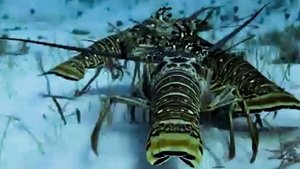
5. Finding the Way1990-11-01 · 50mThis programme explores forms of navigation. Attenborough starts in Africa at dusk, by describing some of the species that don't rely on sight. The spotted hyena uses its acute sen
5
5. Finding the Way1990-11-01 · 50mThis programme explores forms of navigation. Attenborough starts in Africa at dusk, by describing some of the species that don't rely on sight. The spotted hyena uses its acute sen
-
 6
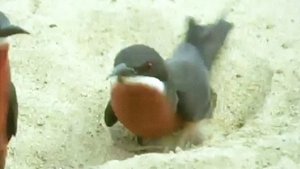
6. Home Making1990-11-08 · 50mThis installment deals with how animals construct their shelters from the elements and predators. Burrows and holes can provide considerable refuge, and Attenborough inspects the h
6
6. Home Making1990-11-08 · 50mThis installment deals with how animals construct their shelters from the elements and predators. Burrows and holes can provide considerable refuge, and Attenborough inspects the h
-
 7
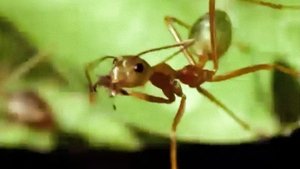
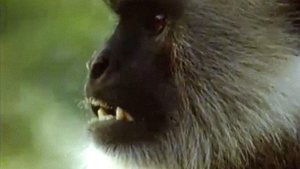
7. Living Together1990-11-15 · 50mThis episode focuses on those species that co-operate and depend on (or exploit) others. Spotted deer follow langur monkeys as they travel from tree to tree, eating any leaves that
7
7. Living Together1990-11-15 · 50mThis episode focuses on those species that co-operate and depend on (or exploit) others. Spotted deer follow langur monkeys as they travel from tree to tree, eating any leaves that
-
 8
8. Fighting1990-11-22 · 50mThis programme details how fighting - both physical and psychological - is used for food, land or to gain a mate. Territorial conflict is demonstrated by the hummingbird, and Atten
8
8. Fighting1990-11-22 · 50mThis programme details how fighting - both physical and psychological - is used for food, land or to gain a mate. Territorial conflict is demonstrated by the hummingbird, and Atten
-
 9
9. Friends and Rivals1990-11-29 · 50mThis installment investigates the ways in which those animals that live in social groups interact with each other. The solitary eagle is contrasted with whooper swans landing in Sc
9
9. Friends and Rivals1990-11-29 · 50mThis installment investigates the ways in which those animals that live in social groups interact with each other. The solitary eagle is contrasted with whooper swans landing in Sc
-
 10
10. Talking to Strangers1990-12-06 · 50mThis episode concentrates on communication. In Kenya, Attenborough accompanies a tribesman who calls to a honeyguide, which in turn answers him and leads the pair to a bees' nest.
10
10. Talking to Strangers1990-12-06 · 50mThis episode concentrates on communication. In Kenya, Attenborough accompanies a tribesman who calls to a honeyguide, which in turn answers him and leads the pair to a bees' nest.
-
 11
11. Courting1990-12-13 · 50mThis programme surveys the methods employed in attracting a mate, mainly those of birds. The Indian florican inhabits long grass, and so is difficult to see. In order to gain atten
11
11. Courting1990-12-13 · 50mThis programme surveys the methods employed in attracting a mate, mainly those of birds. The Indian florican inhabits long grass, and so is difficult to see. In order to gain atten
-
 12
12. Continuing the Line1990-12-20 · 50mThe final installment illustrates how species fulfill their ultimate raison d'être and ensure that their genes are passed on to the next generation. It is a universal problem, but
12
12. Continuing the Line1990-12-20 · 50mThe final installment illustrates how species fulfill their ultimate raison d'être and ensure that their genes are passed on to the next generation. It is a universal problem, but